

Residential Solar System
Residential solar systems come in various types, each designed to meet specific energy needs and considerations.
On Grid
On-grid (Grid-tied systems) are the most common, where solar panels generate electricity that is fed into the utility grid. This allows homeowners to offset their energy consumption and even sell excess power back to the grid.
Off Grid system
On the other hand, operate independently from the grid, relying on battery storage to store excess energy for use during nighttime or cloudy days. They are ideal for remote locations or areas with unreliable grid access.
Hybrid System
Hybrid systems combine the best of both worlds, integrating grid-tied and off-grid capabilities, enabling homeowners to enjoy the benefits of grid connection while also having backup power during outages. Furthermore, there are also community solar systems, where multiple households share the benefits of a larger solar installation located in a communal area. These systems provide an opportunity for individuals without suitable roof space to participate in solar energy generation. With these diverse options, homeowners can select the residential solar system that best suits their energy goals, location, and budget.
How it works?
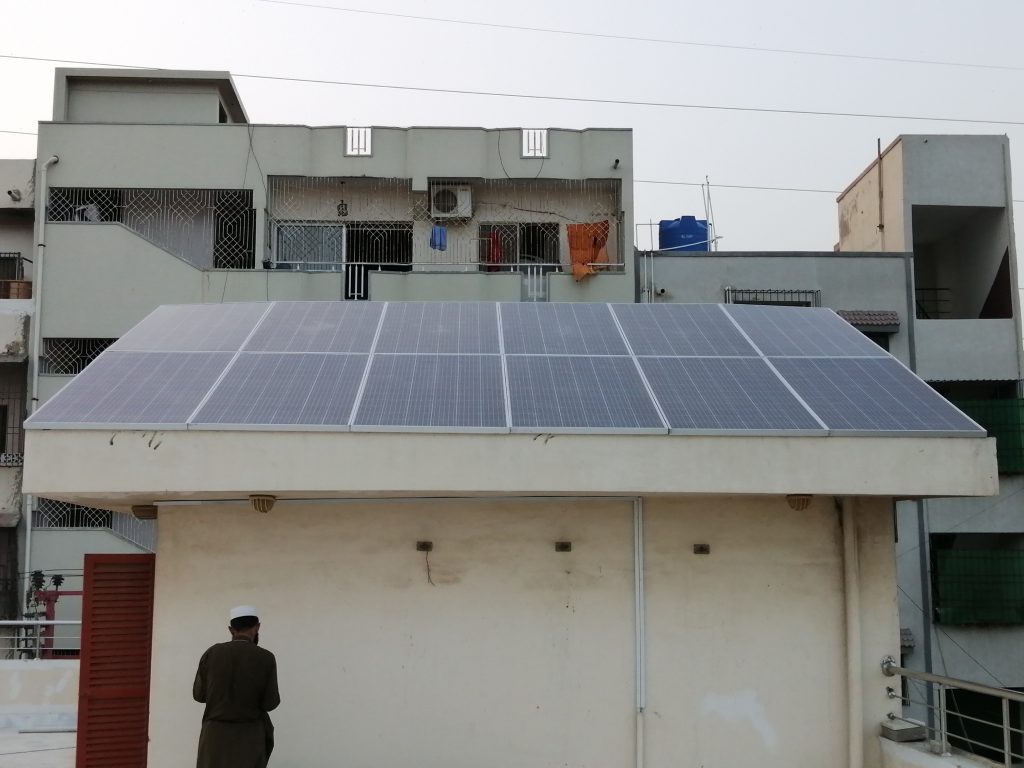
When your solar panel’s system produces electricity, it is consumed on the premises load and any shortfall is seamlessly provided by the grid. If generation from this system is more than the requirement of the home electrical load, the extra energy goes to the battery bank after battery storage is full charge, without net metering this excess generation goes to the grid unaccounted for, and there is no benefit for you. After application, a new “Bi-Directional” electricity meter will be installed as part of the system and will keep track and record this and excess generation and give credit to your monthly bill.